Why the Cheapest Peptide Costs Your Research
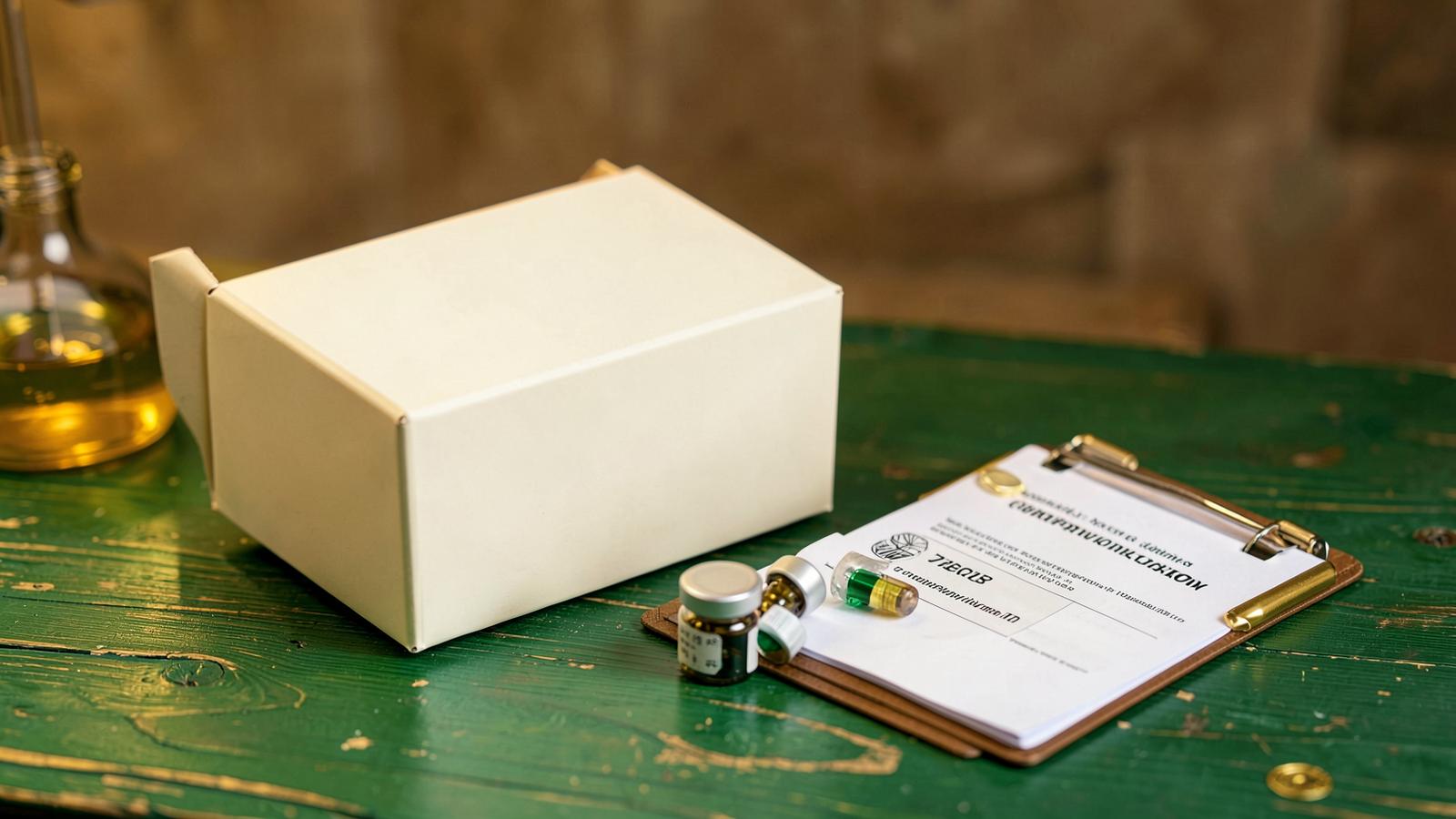
Don't compromise your research. Learn why HPLC-verified peptide purity (>99%) is crucial, and how One Plus Labs ensures quality over price for RUO peptides.
Research Use Only (RUO). All compounds described here are supplied strictly for in-vitro laboratory research. Not for human or veterinary use, and not evaluated by the FDA.
The search for research chemicals online often feels like navigating a minefield. When procuring peptides for their lab, researchers inevitably encounter a vast price range. While some suppliers entice with aggressive discounts, premium vendors charge significantly higher prices. The problem: a peptide is not a standard product like an office chair. In an industry characterized by intransparency and grey imports from the Far East, researchers who choose the cheapest supplier risk not only the validity of their data but also the integrity of their entire experimental setup. Contaminations, incorrect amino acid sequences, or underdosed lyophilized products are not uncommon among cheap suppliers; rather, they represent a systematic risk. Those who only look at the price will end up paying twice – through unusable results and lost time. This article highlights why a thorough quality comparison is the only serious basis for selecting a peptide supplier.
The Economics of Purity: What Price Reveals About Analytics
In professional peptide synthesis, price correlates directly with the effort involved in purification and subsequent validation. A peptide like BPC 157 10mg can superficially be sourced from many places, but the crucial differences lie in the details of HPLC purity (High-Performance Liquid Chromatography). Thompson et al. [1] demonstrate that quality assurance in the peptide supply chain is a multi-stage process, beginning with the selection of protected amino acids.
A low price is often the result of skipped purification steps. While premium suppliers like One Plus Labs aim for purity levels above 99%, the low-price segment often features batches with only 95% or less. What sounds like a small difference means, in a laboratory context, a massive increase in by-products and residual trifluoroacetic acid (TFA). These impurities can trigger unpredictable cross-reactions in in-vitro systems, rendering any significance of your research data null and void. A reputable supplier invests in seamless batch traceability and provides an up-to-date Certificate of Analysis (COA) for each lyophilized product, verified by mass spectrometry and HPLC.
Vendor Qualification: What Researchers Must Consider When Selecting a Supplier
Qualifying a supplier for research materials is, according to Garcia and Martin [2], a critical step in minimizing risk in the laboratory. A mere price comparison falls short here. Instead, researchers should use a structured checklist to assess a supplier's trustworthiness.
Critical Selection Criteria:
- Transparency of Analytics: Are HPLC reports provided proactively per batch, or only "upon request" (which often goes unanswered)?
- Origin and Shipping: Is US shipping from a certified warehouse, or are customs issues and temperature fluctuations due to intercontinental shipping a risk?
- Support Expertise: Is the supplier capable of answering specific questions about amino acid sequences or the stability of the lyophilized product?
A "cheap" supplier usually cuts costs on qualified personnel and warehouse logistics. For research, this means you might receive a product that has already degraded during transport due to heat exposure. Premium distributors, on the other hand, ensure a temperature-controlled chain and proper storage before shipping, which protects the stability of sensitive peptide bonds.
Analytics and Risk Management: The Hidden Dangers of "Bargain Peptides"
The greatest risk in procuring research chemicals is not the absence of an effect, but the presence of endotoxins and organic solvent residues. If a peptide lyophilized product has not been properly freeze-dried, residues of synthesis chemicals can remain in the vial.
In modern peptide research, HPLC purity is the gold standard. A purity level of >99% is essential for precise analyses. Cheap suppliers often declare general values without having them verified by independent laboratories. At One Plus Labs, however, every batch undergoes strict quality control. This includes not only identity verification but also the exclusion of D-amino acid isomers, which can arise from inferior synthesis processes. Those who save at the wrong end risk having their research series aborted due to toxic contaminations in the medium – a financial loss that far exceeds the savings on the purchase price.
Practical Laboratory Notes: Reconstitution and Handling as a Quality Factor
The quality of research results depends not only on the peptide itself but also on its periphery. A common mistake in laboratory practice is the use of inferior solvents. For the reconstitution of lyophilized products, the use of Bacteriostatic Water or sterile water for injection (WFI) is essential to prevent microbial contamination during the storage of the stock solution.
Best Practices for Lab Handling:
1. Storage: Lyophilized peptides should be stored at -20°C to minimize hydrolysis. 2. Reconstitution: The solvent should slowly run down the inner wall of the vial to avoid foaming and thus denaturation of the peptide. 3. Aliquotting: To avoid repeated freeze-thaw cycles, stock solutions should be immediately divided into working aliquots after reconstitution.
A premium supplier not only provides the peptide but also the necessary information and suitable laboratory-grade accessories to ensure the integrity of the samples throughout the entire research period.
Comparative Perspective: Premium Provider vs. Standard Marketplace
| Feature | Premium (e.g., One Plus Labs) | Standard / Cheap Supplier |
|---|---|---|
| Purity Level | >99% (HPLC-verified) | Often <95% or unconfirmed |
| Analytics | COA & Mass Spectrometry per batch | Generic or missing reports |
| Shipping | Secure US shipping | |
| Support | Scientific expert advice | Purely transactional customer service |
| Transparency | Full batch traceability | Opaque sources |
The comparison clearly shows: the supposed price advantage of cheap suppliers is an illusion that comes at the expense of research safety. For valid, reproducible results in peptide research, investing in HPLC-tested quality is indispensable.
Conclusion for Researchers
The decision between price and quality in science is not really a choice, but a matter of methodological correctness. Those who wish to procure peptides for research purposes must prioritize the analytics and reputation of the supplier over the cents per milligram. One Plus Labs offers the necessary security through laboratory-tested purity, comprehensive documentation, and fast, secure US shipping.
Ensure the validity of your data. If you need high-purity RUO peptides for research purposes for your next project, rely on a partner who not only promises quality but proves it with Certificates of Analysis. Visit our shop and find first-class peptides for laboratory research that meet the highest scientific standards.
All peptides described herein are for scientific Research Use Only (RUO) and are not intended for human or animal use.
META: Buy lab-tested peptides: Why purity (>99%) is more important than price. HPLC-verified research chemicals with secure US shipping at One Plus Labs.
Related articles
Deepen your RUO knowledge with curated follow-up reading.
Triple Agonist Peptide (Retatrutide) Guide
Comprehensive guide for researchers on acquiring triple-agonist peptide (Retatrutide) for RUO. Covers quality, purity, and USA regulations.
Tesamorelin: Mechanism, HPLC Purity & Procurement
High-purity Tesamorelin for research. Lab-tested (HPLC/MS), >99% purity & fast US shipping. View scientific data & COAs now!
Quality Criteria for Supplier Selection
Learn essential quality criteria for selecting peptide suppliers, including purity, CoA, stability, and logistics, to ensure research integrity.