Peptide Procurement: Why 99% Purity Matters
The search for reliable sources of high-purity research chemicals today often resembles a blind flight through a legal and qualitative minefield
Research Use Only (RUO). All compounds described here are supplied strictly for in-vitro laboratory research. Not for human or veterinary use, and not evaluated by the FDA.
The search for reliable sources of high-purity research chemicals today often resembles a blind flight through a legal and qualitative minefield. Researchers worldwide face the same dilemma: the market is flooded with cheap imports whose Certificates of Analysis (COAs) are often not worth the paper they are printed on. Those who cut corners in supplier selection not only risk inconsistent data series but also jeopardize the entire integrity of their in-vitro or in-vivo models. Contaminations by trifluoroacetic acid (TFA), endotoxins, or simply mislabeled amino acid sequences lead to artifacts that can invalidate months of work. In a world where precision is everything, "good enough" is often the beginning of the end of a valid study. One Plus Labs understands this pain point and starts where standard suppliers stop: with the uncompromising verification of every single batch.
The Evolution of Supplier Selection: Beyond the Price Tag
In modern peptide research, the focus has shifted from mere availability to comprehensive batch traceability. Thompson et al. (2021) emphasize in their work on quality assurance in peptide supply chains that the structural integrity of a lyophilisate is already determined during the synthesis process and subsequent purification [1]. A critical aspect when choosing a partner for RUO Peptides for Research Purposes is the transparency of analytics.
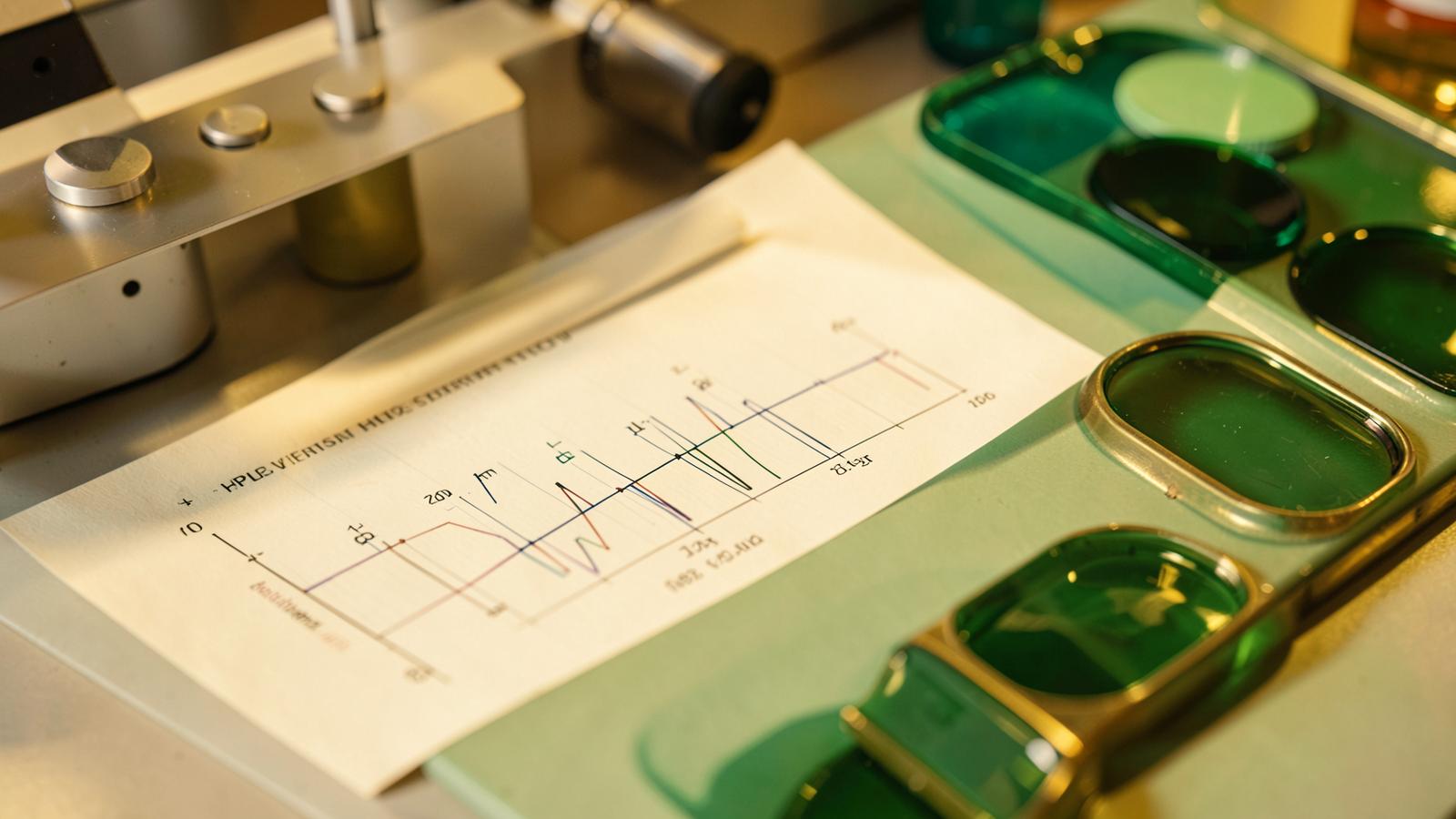
Previously, a simple identity confirmation was sufficient. Today, specialized laboratories demand detailed HPLC chromatograms and mass spectrometry data (MS) to confirm the exact molar mass and purity. A reputable supplier acts not only as a dealer but as a qualified gatekeeper. The complexity of molecules like BPC 157 10MG requires precise synthesis control to minimize by-products that could falsify biological pathways in research models. Supplier selection must therefore be considered an integral part of the study design, not an administrative footnote.
The Buyer-Guide: What Researchers Must Look for in Procurement
According to Garcia and Martin (2019), the qualification of suppliers for research materials is a multi-stage process that goes far beyond simple ordering [2]. When procuring peptides for laboratory research, the following criteria should be considered "non-negotiables":
1. Analytical Depth: Does the supplier offer batch-specific HPLC and MS reports? A static sample certificate is a warning sign. 2. Shipping Logistics: Peptides are sensitive molecules. Fast US shipping minimizes thermal stress during transport, which is particularly crucial for temperature-sensitive sequences like TB 500 10MG. 3. Purity Guarantee: A standard of >98% is the minimum; premium suppliers like One Plus Labs aim for >99% to rule out interferences in highly sensitive assays.
An often-overlooked point is the chemical form of the peptide. Most peptides are supplied as acetate salts or TFA salts. For certain cell culture experiments, knowledge about the residual salt content is essential to avoid uncontrolled influence on the medium's osmolarity. A competent partner provides this data proactively.
Quality & Analytics: The Danger of "Blind Buys"
Why is buying cheap peptides dangerous? The answer lies in preparative chromatography. To achieve a purity of over 99%, elaborate purification cycles that require time and expensive solvents must be performed. Cheap suppliers cut this process short. The result is lyophilisates which, although they contain the target molecule, also show significant amounts of deletion sequences (peptides missing an amino acid) or oxidized derivatives.
Therefore, Quality Control for Peptides at One Plus Labs includes HPLC verification (High-Performance Liquid Chromatography), which determines purity, and mass spectrometry, which ensures that the amino acid sequence exactly matches the target specification. Without this validation, all research is built on sand. Contaminations can block receptors non-specifically or trigger toxic effects in cell cultures, which are mistakenly attributed to the peptide. This leads to a massive waste of resources and potentially false scientific conclusions.
Practical Laboratory Tips: Reconstitution and Handling
Even the purest peptide loses its integrity if handling in the laboratory is faulty. After receiving the Peptides for Laboratory Research, storage is the first critical step. Lyophilized peptides should be stored at 4°C for short-term storage, but for long-term storage at -20°C or -80°C, to prevent moisture absorption and enzymatic degradation.
Best Practices for Reconstitution:
- Temperature equilibration: Allow the vial to come to room temperature before opening to avoid condensation inside.
- Solvent choice: Use only sterile, deionized solvents (e.g., bacteriostatic water or PBS), depending on the solubility profile of the specific peptide.
- Mechanical stress: Avoid vigorous shaking. Gentle swirling protects the delicate secondary structure of the molecules.
Especially for larger units like BPC 157 10MG, it is advisable to create aliquots after reconstitution. Repeated freeze-thaw cycles inevitably lead to the degradation of peptide bonds and thus to a loss of efficacy in the experimental series.
Premium Provider vs. Standard: What Are the Differences?
The comparison between a premium provider like One Plus Labs and a standard distributor is evident primarily in transparency and support. While standard providers often act only as resellers and possess little knowledge about the chemical properties of their products, One Plus Labs offers scientifically sound expertise.
| Feature | Standard Provider | One Plus Labs (Premium) |
|---|---|---|
| Purity Grade | Often <95% or unclear | Guaranteed >99% (HPLC-verified) |
| Analytics | Generic COAs | Batch-specific HPLC & MS |
| Shipping | Often from third countries (customs risk) | Fast, secure US shipping |
| Support | Automated / No technical expertise | Specialist editorial team & scientific support |
| Safety | High risk of contaminations | Endotoxin-free & lab-tested |
The decision for a premium partner is ultimately a decision for the validity of your research data. In a competitive environment where publications and funding depend on the reproducibility of results, the quality of the reagents used is the only leverage where no compromises can be made.
Conclusion: Precision as the Standard in Peptide Research
Selecting the right supplier is not an administrative act but a strategic decision for the quality of your scientific work. Integrating high-purity substances such as BPC 157 10MG or TB 500 10MG into your research projects requires that you can rely on their chemical identity and purity. One Plus Labs provides the necessary infrastructure for this: HPLC-verified purity, complete documentation, and fast USA-wide shipping that guarantees the stability of your samples.
Secure the integrity of your next experimental series and choose a partner who speaks the language of science. Visit our shop for high-purity research chemicals and experience the difference that true quality makes in the lab.
Disclaimer: All peptides described herein are exclusively for scientific research purposes (Research Use Only / RUO) and are not intended for human or animal use.
META: Lab-tested peptides with >99% purity for your research. Secure US shipping, HPLC-verified batches & full transparency. Ensure quality for your lab now!
Related articles
Deepen your RUO knowledge with curated follow-up reading.
Triple Agonist Peptide (Retatrutide) Guide
Comprehensive guide for researchers on acquiring triple-agonist peptide (Retatrutide) for RUO. Covers quality, purity, and USA regulations.
Tesamorelin: Mechanism, HPLC Purity & Procurement
High-purity Tesamorelin for research. Lab-tested (HPLC/MS), >99% purity & fast US shipping. View scientific data & COAs now!
Quality Criteria for Supplier Selection
Learn essential quality criteria for selecting peptide suppliers, including purity, CoA, stability, and logistics, to ensure research integrity.