BPC-157 in Tissue Research: Mechanisms & Methods
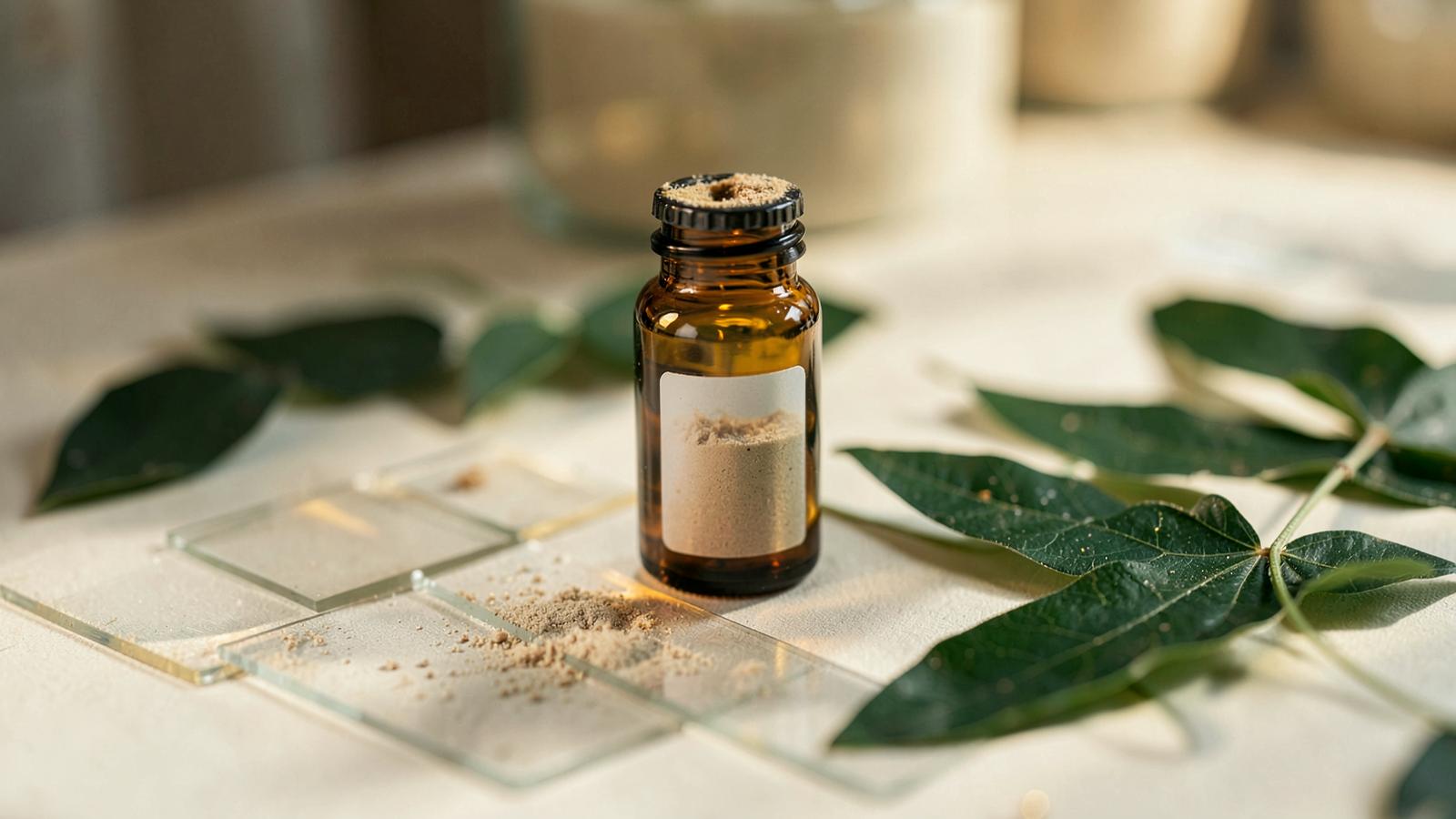
Explore BPC-157's molecular mechanisms and lab methods. Learn why >99% HPLC purity is crucial for reproducible research. One Plus Labs offers high-quality RUO…
Research Use Only (RUO). All compounds described here are supplied strictly for in-vitro laboratory research. Not for human or veterinary use, and not evaluated by the FDA.
Preclinical research today faces a massive challenge: the reproducibility of study results is increasingly suffering from substandard reagents. Anyone working in peptide research knows the problem – the market is flooded with cheap imports from overseas, which often do not deliver what the label promises. Contaminations by TFA (Trifluoroacetic acid), solvent residues, or simply incorrectly declared sequences lead to inconsistent data and jeopardize entire research projects. If your in-vitro models do not show the expected signaling pathways, it is often not due to the hypothesis, but to the quality of the lyophilisate. A lack of transparency and missing batch-specific HPLC analyses are unfortunately the rule, not the exception, with many suppliers. In an environment where precision is everything, "good enough" is a scientific risk that no serious researcher can afford.
Molecular Mechanisms of BPC-157 in Cellular Signal Transduction
BPC-157 (Body Protection Compound 157) is a pentadecapeptide that is intensively studied in biochemical research due to its unique stability and its interaction with various growth factor signaling pathways. Current research primarily focuses on the modulation of vascular endothelial growth factor (VEGF). In-vitro data suggest that BPC-157 can influence the expression of Early Growth Response 1 (EGR-1), a key gene for cellular proliferation and extracellular matrix formation.
Another crucial aspect in peptide research is the stability of the molecules. While many peptides are extremely susceptible to degradation in aqueous solutions, literature shows that the specific amino acid sequence of BPC-157 exhibits remarkable resistance to enzymatic degradation. As Manning et al. [2] elaborated in their work on the stability of peptides in aqueous solutions, chemical integrity is crucial for biological activity in laboratory experiments. Any deviation in the sequence or incorrect folding during synthesis can completely neutralize the interaction with cellular receptors.
In modern laboratory practice, BPC-157 is often studied in synergy with other peptides such as TESAMORELIN 5MG to understand complex signaling pathways of the growth hormone axis and their influence on tissue homeostasis. Research here focuses on how different peptide classes can modulate gene expression in mesenchymal stem cells.
Quality Criteria for Sourcing Research Chemicals: A Buyer's Guide
When you procure BPC-157 or other RUO peptides for research purposes for your laboratory, purity should be the primary decision criterion. But what does "purity" really mean in peptide chemistry? Many suppliers advertise 98%, but conceal the type of impurities.
A reputable supplier of peptides for laboratory research must meet the following criteria: 1. Batch-specific Transparency: A Certificate of Analysis (COA) should be available for each individual batch. 2. HPLC Verification: High-Performance Liquid Chromatography is the gold standard for determining chemical purity. A peak at >99% is essential for valid research data. 3. Mass Spectrometry (MS): Only MS can confirm that the amino acid sequence actually corresponds to the target molecule. 4. USA Shipping: Cross-border shipments from non-USA countries not only entail legal risks but also thermal hazards for sensitive lyophilisates.
Buying from discount suppliers often leads to "ghost peptides" – substances that appear as white powder but whose actual content of active substance is massively reduced by fillers or synthesis by-products. This falsifies the molar concentration in your experimental series and makes precise reconstitution impossible.
Analytics and Purity: Why >99% HPLC Purity is Essential for Research
Peptide synthesis usually occurs via Solid-Phase Peptide Synthesis (SPPS), a method largely developed by Merrifield [1]. Despite state-of-the-art automation, this process inevitably produces by-products: deletion sequences (peptides missing an amino acid) or chemically modified variants (e.g., oxidized methionines).
A purity of 95% initially sounds high, but in a laboratory context, it means that 5% of the substance consists of unknown impurities. In cell culture, these impurities can be cytotoxic or trigger non-specific receptor interactions that falsify your results. At One Plus Labs, we therefore rely on a standard of >99%. This is achieved through multiple purification cycles to ensure that only the pure target molecule reaches the final lyophilisate.
Another critical point in peptide quality control is the endotoxin content. Endotoxins are cell wall components of bacteria that can be introduced during synthesis or bottling. In-vitro studies are extremely sensitive to endotoxins, as they can trigger inflammatory reactions in cell cultures. An HPLC-tested peptide from One Plus Labs guarantees you a clean baseline for your experiments.
Practical Laboratory Notes: Reconstitution and Handling of Lyophilisates
Correct handling in the laboratory determines the half-life of your samples. Peptides like BPC-157 are supplied as a lyophilisate (freeze-dried powder) to maximize stability during shipping.
Storage
Unopened vials should ideally be stored at -20°C to prevent hydrolysis or oxidation over longer periods. For short-term use (a few weeks), storage at 4°C is often sufficient, provided the peptide is protected from light.
Reconstitution
Reconstitution should be done with the utmost care. Use only sterile, research-grade buffers (e.g., PBS or bacteriostatic water). The solvent should gently flow down the inner wall of the vial. Avoid vigorous shaking, as this can lead to denaturation of the peptide chains – gentle swirling is sufficient.
Aliquoting
To avoid repeated freeze-thaw cycles, which can damage the peptide structure, you should immediately divide the stock solution into working aliquots after reconstitution. This ensures consistent quality for each experimental series. Remember that stability in solution is significantly lower than in the lyophilized state, as Manning et al. [2] have documented in detail.
Comparison: One Plus Labs Premium Standard vs. Standard Suppliers
| Feature | One Plus Labs | Standard Suppliers (Asia/USA) |
|---|---|---|
| Purity Level | >99% (HPLC-verified) | Often <95% or unconfirmed |
| Analytics | COA & Mass Spectrometry incl. | Only upon request or fake |
| Shipping | Secure US shipping (no customs risk) | Customs problems, long transit times |
| Support | Expert scientific advice | Anonymous support |
| Transparency | Batch traceability | Opaque sources |
The difference often only becomes apparent in the results: while standard peptides lead to inconsistent data, One Plus Labs offers the security necessary for high-caliber publications and reproducible research. For example, when working with complex molecules like TESAMORELIN 5MG, structural integrity is even more critical due to the longer amino acid sequence than with smaller peptides.
Conclusion for Research Practice
The study of BPC-157 offers fascinating insights into molecular tissue research. However, the validity of these insights depends on the quality of the research chemicals used. Do not rely on vague promises, but on laboratory-tested purity and transparent analytics.
One Plus Labs is your partner for high-end peptide research. We provide you with the precision your work deserves – from synthesis according to Merrifield standards to secure shipping within the USA. Optimize your experimental series with peptides that set new standards in purity and reliability.
[Discover our portfolio of high-purity research peptides in the One Plus Labs Shop now]
All peptides described here are intended exclusively for scientific research purposes (Research Use Only / RUO) and are not for use in humans or animals.
Scientific Sources
- [1] Merrifield RB "Solid-phase peptide synthesis: principles and applications". Science (1986). DOI: 10.1126/science.3961484
- [2] Manning MC, et al. "Peptide stability in aqueous solutions". Pharmaceutical Research (2010). DOI: 10.1007/s11095-009-0045-6
Related articles
Deepen your RUO knowledge with curated follow-up reading.
What Is a Peptide-Drug Conjugate (PDC)?
Explore Peptide-Drug Conjugates (PDCs) – the next evolution in targeted drug delivery. Learn about their structure, benefits, and applications in…
Triple Agonists: GLP-1/GIP/GCG Research
Explore the Triple-Agonist Peptide (LY3437943) in research: mechanism, preclinical data, quality control, and procurement for USA labs. For Research Use…
Triple Agonist Peptides: Preclinical Findings
Explore documented preclinical data on the Triple-Agonist Peptide (GLP-1/GIP/GCG). Learn about receptor pharmacology, cell models, and rodent…