Peptide Stability in Various Solvents
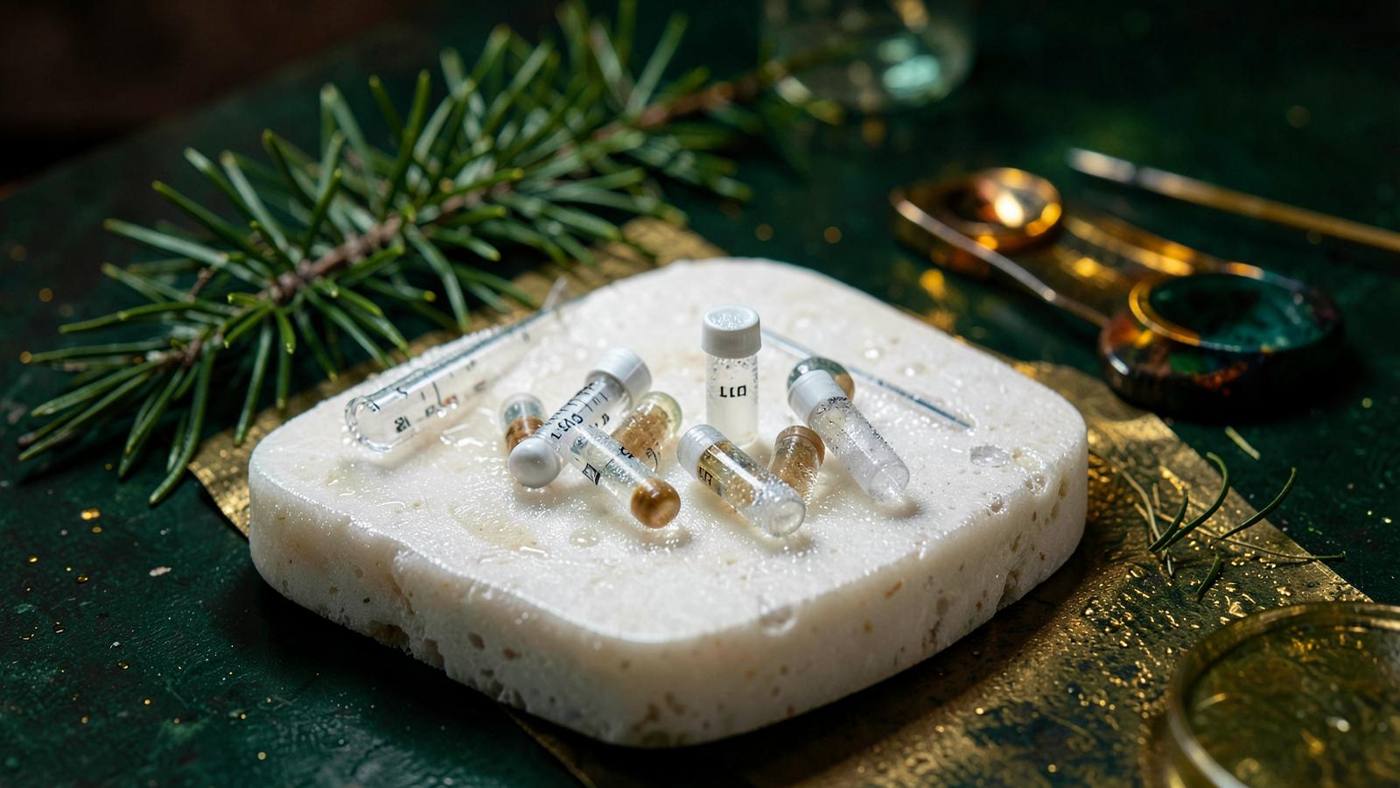
Explore peptide stability in various solvents for lab research. Learn about degradation pathways, BACTERIOSTATIC WATER, co-solvents, and best practices…
Research Use Only (RUO). All compounds described here are supplied strictly for in-vitro laboratory research. Not for human or veterinary use, and not evaluated by the FDA.
The Critical Relevance of Peptide Stability in Modern Laboratory Research
The integrity of peptide sequences forms the backbone of modern biochemical research. Since Merrifield's groundbreaking establishment of solid-phase peptide synthesis (SPPS) [1], the availability of synthetic peptides has increased exponentially. However, while synthesis processes have been highly optimized, the stability of these molecules in solution remains one of the greatest challenges for researchers worldwide. A peptide is not a static object; it is a dynamic chemical system that continuously interacts with its environment. In vitro studies fundamentally depend on the primary structure and conformation of the analyte being maintained throughout the entire experimental period.
Even minor deviations in pH, ionic strength, or solvent polarity can lead to deamidation, oxidation, or irreversible aggregation. If laboratory analyses yield inconsistent results, the cause is often not in the experimental design but in the degradation of the peptide in the chosen solvent. A precise understanding of how specific sequences react to different media is therefore essential for the reproducibility of scientific data.
Chemical Degradation Pathways in Aqueous Systems
Aqueous solutions are the standard medium for most biological assays but pose significant risks to peptide integrity. Research shows that while peptide bond hydrolysis is energetically favored, it is kinetically slow – in contrast, side-chain modifications often proceed rapidly. Manning et al. [2] identified the deamidation of asparagine and glutamine residues as one of the primary degradation pathways in aqueous environments. This process is highly pH-dependent and leads to the formation of isoaspartate, which can massively disrupt the peptide's tertiary structure.
Another critical phenomenon is oxidation, particularly in sulfur-containing amino acids like methionine or cysteine. In an aqueous environment, dissolved oxygen or trace metal ions can act as catalysts. For research with peptides like BPC 157 10mg, the choice of solvent is therefore crucial to ensure structural homogeneity during the analysis phases. The use of high-purity, degassed water or specific buffer systems is a standard procedure in peptide quality control to minimize these oxidative processes.
The Role of BACTERIOSTATIC WATER and Preservatives
In long-term research, solvents are often needed that go beyond mere solubility. BACTERIOSTATIC WATER, which contains 0.9% benzyl alcohol, is frequently used in laboratories to suppress microbial growth in stock solutions. While benzyl alcohol effectively acts as a bacteriostat, its influence on peptide conformation must be critically considered. The hydrophobic properties of the alcohol can affect the aggregation tendency of certain peptide sequences or reduce the solubility of hydrophilic sequences.
Scientific data suggest that stability in such systems strongly depends on ionic strength. High salt content can promote the "salting-out" effect, where peptides precipitate due to reduced hydration shells. For laboratory research with peptides, it is therefore essential to validate the compatibility between the bacteriostat and the specific peptide sequence beforehand using chromatographic methods (such as HPLC).
Influence of Polarity and Organic Co-Solvents
Not all peptides exhibit sufficient solubility in purely aqueous media. Particularly hydrophobic sequences tend to form beta-sheet aggregates, which are often irreversible. In such cases, researchers resort to organic co-solvents like dimethyl sulfoxide (DMSO) or acetonitrile. These solvents alter the dielectric constant of the medium and can stabilize intramolecular hydrogen bonds.
However, research also shows limitations here: DMSO can act as an oxidizing agent during prolonged storage, converting methionine residues into sulfoxides. Therefore, in preclinical research, a stock solution is often prepared in an organic solvent and diluted with an aqueous buffer immediately before the experiment. This strategy combines the advantages of initial solubility with the biological compatibility of the aqueous system. For specialized RUO peptides for research purposes, documenting the optimal solvent ratio is a central component of the analytical data sheet.
Physical Factors: Temperature and Photostability
In addition to the chemical composition of the solvent, physical parameters play a crucial role in solution shelf life. The Arrhenius equation illustrates that the rate of chemical reactions (and thus degradation) increases exponentially with temperature. While lyophilized peptides can remain stable for years at -20°C or -80°C, their half-life in solution at room temperature often reduces to a few days or even hours.
Photodegradation is an often underestimated factor. Amino acids with aromatic side chains like tryptophan or tyrosine can absorb photons, leading to radical formation and subsequent cleavage of the peptide chain. Laboratory analyses should therefore preferably be carried out in brown glass vessels or in the absence of light. The thermal stability of more complex molecules like BPC 157 10mg in solution is an active area of research, with cryoprotective additives such as glycerin or trehalose being investigated to preserve integrity during repeated freeze-thaw cycles.
Practical Best Practices for Peptide Reconstitution
To ensure the validity of research data, the following standards should be observed in the laboratory:
1. Solubility Test: First, a minimal amount of the peptide should be tested in the chosen solvent before reconstituting the entire batch. 2. Use of High-Purity Substances: Only sterile, pyrogen-free solvents such as BACTERIOSTATIC WATER or HPLC-grade water should be used. 3. Avoidance of Shear Forces: Peptides should be dissolved by gentle swirling and not by vigorous vortexing to prevent denaturation at the air-water interface. 4. Aliquotting: To avoid repeated freeze-thaw cycles, stock solutions should be divided into single-use aliquots immediately after reconstitution. 5. pH Control: Checking the pH after dissolution is critical, as many peptide salts (e.g., TFA salts from synthesis) can significantly lower the pH of the medium, affecting stability.
Conclusion and Outlook
The stability of peptides in solvents is not a static attribute but the result of complex chemical interactions. As Manning et al. [2] aptly demonstrated, working with peptides in aqueous systems requires a deep understanding of degradation kinetics. From choosing the right water to considering co-solvents and physical storage conditions – every step influences the quality of research results.
In the future, new formulations, such as encapsulation in nanoparticles or the use of ionic liquids, could further revolutionize the stability of peptides in solution. Until then, precise adherence to laboratory protocols and the use of high-quality resources remain the only guarantee for reproducible and reliable scientific data in peptide research.
Scientific Disclaimer: This article is for informational and research purposes only within the scope of laboratory science (Research Use Only - RUO). Peptides such as BPC 157 10mg or excipients like BACTERIOSTATIC WATER are not approved for diagnostic or therapeutic use in humans or animals. The chemical properties and stability profiles refer to in vitro observations and preclinical laboratory analyses. Any form of application outside controlled laboratory environments is strictly prohibited.
References:[1] Merrifield, R. B. (1986). Solid-phase peptide synthesis: principles and applications. Science, 232(4748), 341-347. [2] Manning, M. C., Chou, D. K., Murphy, B. M., Payne, R. W., & Katayama, D. S. (2010). Peptide stability in aqueous solutions: mechanisms and strategies for stabilization. Pharmaceutical Research, 27(4), 544-575.
Related articles
Deepen your RUO knowledge with curated follow-up reading.
Third Party Testing Pros and Cons
Learn about the importance of third-party testing (HPLC/MS) for high-purity peptides (>99%). Ensure accurate research with One Plus Labs's lab-tested RUO…
Endotoxin Testing in Lyophilised Peptides
Learn why endotoxin tests are crucial for peptide research. One Plus Labs offers >99% purity, HPLC-verified, and US shipping for reliable results.
Stability Studies for Lyophilized Peptides
Lab-tested peptides with >99% purity. Learn about stability studies, HPLC analytics & secure US shipping for your research. Get informed now!