Third Party Testing Pros and Cons
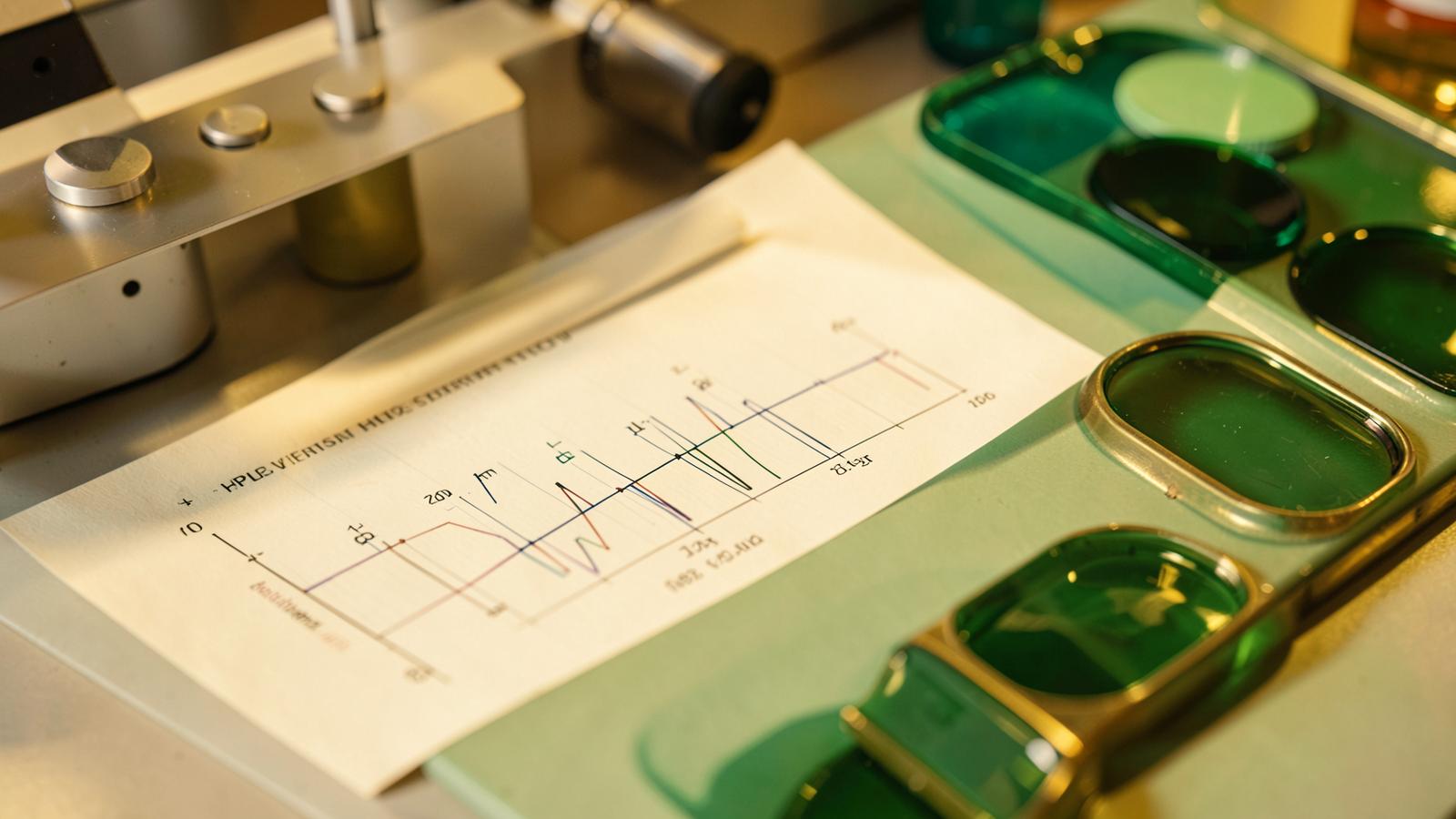
Learn about the importance of third-party testing (HPLC/MS) for high-purity peptides (>99%). Ensure accurate research with One Plus Labs's lab-tested RUO…
Research Use Only (RUO). All compounds described here are supplied strictly for in-vitro laboratory research. Not for human or veterinary use, and not evaluated by the FDA.
The search for high-purity peptides for scientific work often resembles a risky gamble. While the market is flooded with suppliers luring with aggressive pricing and shiny labels, the crucial question often remains unanswered: What is truly inside the vial? In peptide research, the discrepancy between the label and the actual content is a known, yet often underestimated, problem. Contaminations from solvent residues, incorrect amino acid sequences, or simply underdosed lyophilized products not only jeopardize the reproducibility of your data but, in the worst case, lead to the complete loss of costly experimental series. A COA (Certificate of Analysis) from the manufacturer itself is often no more than a piece of paper without objective value in the industry. Those who rely on validity in research cannot avoid independent verification by third parties – the so-called Third-Party Testing. It is the only barrier between precise science and expensive data waste.
The Architecture of Security: What Constitutes True Third-Party Testing
In modern peptide analytics, the independence of the testing laboratory is the highest good. True Third-Party Testing means that an external, certified institution takes samples directly from the current batch or receives them from the dealer, without the latter being able to influence the result. According to Thompson et al. [1], quality assurance in the peptide supply chain is a multi-stage process that goes far beyond mere identity verification.
A valid analysis report must necessarily contain two core components: HPLC (High-Performance Liquid Chromatography) and MS (Mass Spectrometry). While HPLC determines the purity level – ensuring, for example, that a lyophilized product of MOTS C 10MG is not contaminated by synthesis by-products – mass spectrometry confirms the correct molecular mass and thus the identity of the amino acid sequence. Without this dual verification, every research hypothesis is built on shaky ground. For laboratories, this means: a supplier who cannot provide current, batch-specific reports from independent institutes poses an incalculable risk to the integrity of research data.
Risk Management: Why "Buying Cheap" Is the Most Expensive Decision
The price pressure on research chemicals often leads to compromises in analytics. However, the cost of a faulty batch far exceeds the savings made during purchase. Garcia and Martin [2] emphasize in their work on qualifying suppliers for research materials that analytical transparency must be the primary selection criterion.
Low-cost suppliers often forgo endotoxin tests or testing for residual salts (such as TFA – trifluoroacetic acid), which originate from the synthesis process. In in-vitro studies, even small amounts of endotoxins can falsify cellular responses that have nothing to do with the actual peptide. For example, if you are investigating the metabolic signaling pathways of NAD PLUS 500MG in a laboratory context, you must ensure that the observed effects are solely attributable to the molecule and not to toxic residues. High-quality suppliers like One Plus Labs therefore rely on seamless batch traceability and provide the corresponding certificate of analysis with every delivery, guaranteeing an HPLC purity of over 99%.
Buyer-Guide: What to Look for When Choosing Your Peptide Supplier
Selecting a reputable partner for the procurement of research chemicals requires looking beyond the marketing facade. Pay attention to the following criteria to ensure the validity of your research:
1. Timeliness of Reports: A COA from 2022 for an order in 2024 is worthless. Each batch must be tested separately. 2. Verifiability: Reputable laboratories allow verification of their reports using a reference number directly on their website or via email request. 3. Transparency of Parameters: A professional report shows the integration curves of the HPLC. If only a percentage is given without the corresponding chromatograms, caution is advised. 4. Origin and Shipping: Peptides are sensitive molecules. Fast US shipping minimizes the time the lyophilized product is exposed to uncooled temperature fluctuations, which could jeopardize the stability of the peptide bonds.
The Role of Purity Levels
In peptide research, “98% purity” is often mentioned. What many researchers overlook: the remaining 2% can consist of deletion sequences or chemical residues that are highly reactive. Premium suppliers therefore consistently aim for purity levels of >99% to minimize noise in experimental data.
Practical Laboratory Tips: Reconstitution and Handling of High-End Peptides
Even the purest peptide loses its integrity if handling in the laboratory does not meet standards. Reconstitution is a critical moment. The lyophilized product should reach room temperature before opening the vial to avoid condensation inside, which could lead to premature hydrolysis.
For reconstitution, use only sterile, research-grade solvents (such as bacteriostatic water or 0.9% NaCl solution), depending on the requirements of your protocol. When adding the solvent, the stream should glide along the inner wall of the vial to prevent foaming and thus denaturation of the sensitive peptide chains. For substances like MOTS C 10MG, gentle swirling instead of vigorous shaking is essential to preserve the structural integrity of the amino acid sequence. After reconstitution, storage at 2-8 °C is often advisable only for limited periods; for long-term studies, aliquots should be frozen to avoid repeated freeze-thaw cycles.
Premium vs. Standard: Where One Plus Labs Sets New Standards
The difference between a standard distributor and a premium supplier like One Plus Labs lies in the depth of quality assurance. While standard suppliers often merely pass on the data sheets of raw material producers, One Plus Labs acts as an additional control instance.
- Purity: While the market standard often lies at 95-98%, One Plus Labs exclusively supplies peptides with an HPLC-verified purity of >99%.
- Transparency: Every product, from NAD PLUS 500MG to complex signaling peptides, comes with a batch-specific certificate of analysis.
- Logistics: Shipping from our US facility not only eliminates customs risks but also extremely long transport routes that could impair the stability of research materials.
- Support: Expert knowledge is paramount at One Plus Labs to assist researchers in selecting the right specifications for their projects.
In a world where research budgets are tight and results are under constant pressure to justify, investing in lab-tested quality is not a luxury but a necessity.
Conclusion: Security Is the Foundation of Every Discovery
Third-Party Testing is far more than an optional quality feature – it is the insurance policy for your scientific work. Those who forgo independent analytics risk the integrity of their entire research. One Plus Labs offers you the security you need for precise and reproducible results. Through the combination of HPLC-verified purity, seamless transparency, and fast US shipping, we are the partner for researchers who make no compromises.
Secure your next experimental series. Discover our range of high-purity RUO peptides for research purposes and rely on analytics that deliver what they promise.
Disclaimer: All peptides described herein are exclusively for scientific Research Use Only (RUO) and are not intended for use in humans or animals.
Related articles
Deepen your RUO knowledge with curated follow-up reading.
Endotoxin Testing in Lyophilised Peptides
Learn why endotoxin tests are crucial for peptide research. One Plus Labs offers >99% purity, HPLC-verified, and US shipping for reliable results.
Stability Studies for Lyophilized Peptides
Lab-tested peptides with >99% purity. Learn about stability studies, HPLC analytics & secure US shipping for your research. Get informed now!
Peptide Stability in Various Solvents
Explore peptide stability in various solvents for lab research. Learn about degradation pathways, BACTERIOSTATIC WATER, co-solvents, and best practices…