Stability Studies for Lyophilized Peptides
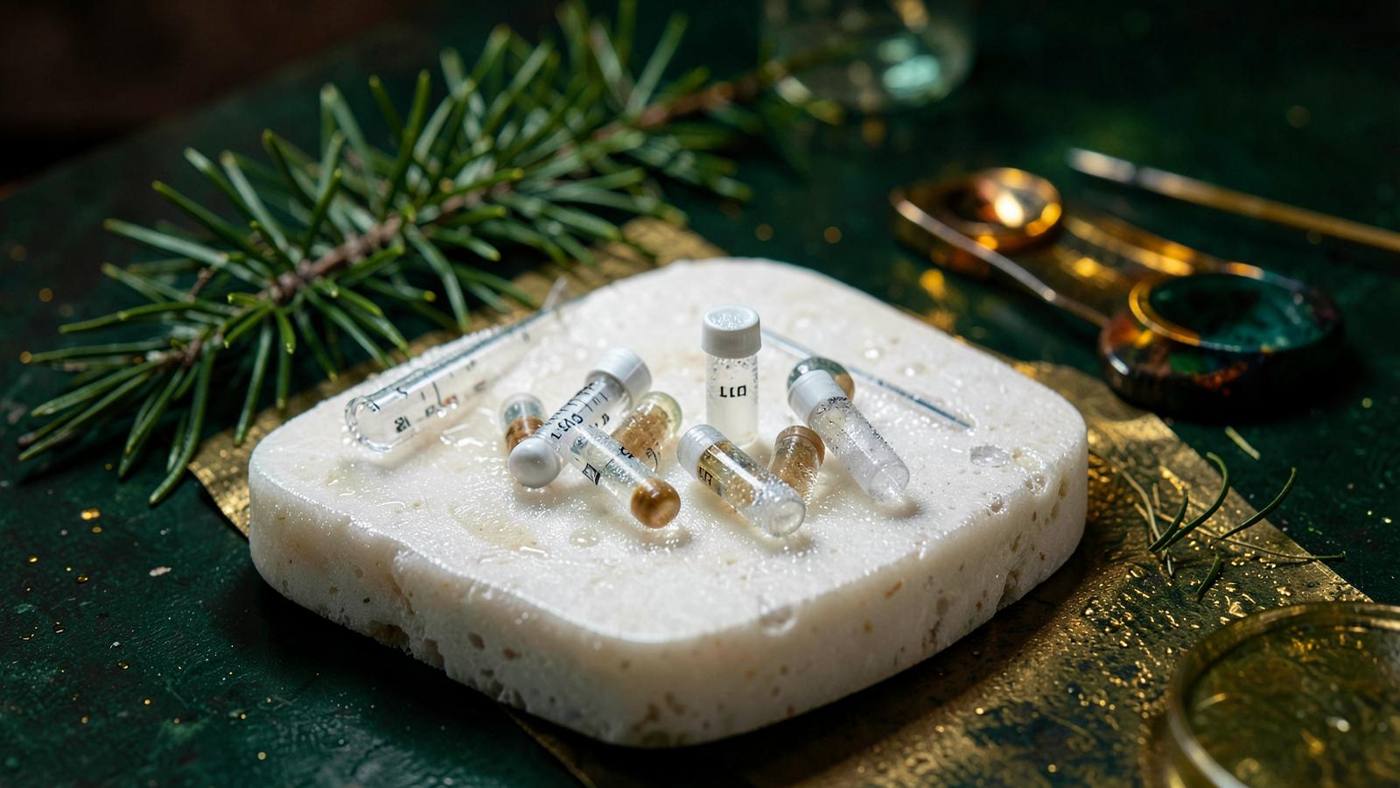
Lab-tested peptides with >99% purity. Learn about stability studies, HPLC analytics & secure US shipping for your research. Get informed now!
Research Use Only (RUO). All compounds described here are supplied strictly for in-vitro laboratory research. Not for human or veterinary use, and not evaluated by the FDA.
The precision of scientific experiments hinges on the integrity of the reagents used. Anyone involved in peptide research knows the frustrating scenario: despite an exact experimental setup, results remain inconsistent or reproducible data is elusive. Often, the cause lies not in the experimental design, but in the chemical degradation of the samples. Many suppliers in the gray market entice with aggressive pricing, yet conceal the inadequate stability of their lyophilized products or deliver batches without validated stability data. A purity of 98% upon leaving the factory is of little use if the peptide has already degraded upon arrival in the lab due to inferior lyophilization or improper transport. For researchers, this not only means a loss of valuable budget but also jeopardizes the validity of entire series of studies. Those who procure "cheap" for the lab often pay with the integrity of their research data.
The Science of Shelf Life: Mechanisms of Peptide Degradation
Lyophilized peptides like Thymosin Alpha 1 10mg, while considered relatively stable, are subject to complex chemical and physical degradation processes. Stability research primarily focuses on preventing oxidation, deamidation, and hydrolysis. The scientific literature emphasizes that the amino acid sequence largely determines how susceptible a molecule is to environmental influences. Sequences containing methionine, cysteine, or tryptophan are particularly sensitive to oxidation.
Lyophilization (freeze-drying) is the gold standard for minimizing kinetic energy in the system and slowing down chemical reactions. Nevertheless, a small amount of residual moisture remains in the glass vial. If the temperature rises during transport or storage, this residual moisture can be sufficient to initiate hydrolytic processes. In vitro studies suggest that even minimal deviations in secondary structure can massively affect binding affinity in receptor studies. Therefore, continuous stability studies are essential to ensure that the research chemical maintains its specified purity throughout the entire study period.
High-Level Analytics: HPLC and Mass Spectrometry as Guardians of Purity
To validate the stability of a peptide over a defined period, highly precise analytics are indispensable. As Aguilar [1] demonstrates in his work on HPLC method development for peptide analysis, high-performance liquid chromatography is the primary tool for separating degradation products from the target substance. Only through an optimized mobile phase and specific column parameters can even the smallest impurities, caused by thermal stress, be identified.
In addition, mass spectrometry plays a crucial role. Aebersold and Mann [2] have shown how mass spectrometry is used to identify peptides and their modifications. At One Plus Labs, we use these procedures in quality control to ensure that, for example, NAD Plus 500mg (as a coenzyme in a laboratory context) has the exact molecular mass and no fragments are present due to premature degradation. A Certificate of Analysis (COA) should therefore never be viewed merely as a static document, but as proof of batch-specific HPLC verification guaranteeing a purity of >99%.
Buyer's Guide: What Researchers Must Consider When Procuring Peptides
The market for research chemicals is complex. To protect the validity of your laboratory work, you should not compromise when selecting a supplier. Pay attention to the following criteria:
1. Batch Traceability: Each container must be assigned to a specific batch for which a current HPLC and MS protocol is available. 2. Analytical Transparency: A reputable supplier will provide you with chromatograms. Ensure that the baseline of the HPLC curve is stable – "noise" often indicates impurities. 3. Shipping Conditions: Peptides are temperature-sensitive. Fast US shipping reduces the time samples are exposed to uncooled conditions. 4. Vial Sealing: Look for high-quality vacuum sealing of lyophilized products. Oxygen is the enemy of stability.
At One Plus Labs, we specialize in bridging the gap between industrial standards and academic research requirements. We exclusively supply HPLC-verified goods, stored and shipped under strict RUO (Research Use Only) criteria.
Practical Lab Notes: Reconstitution and Handling of Lyophilized Products
Even the most stable peptide can be destroyed by improper handling in the lab. Reconstitution is a critical moment. The lyophilized product should reach room temperature before opening the vial to avoid condensation inside. The solvent (usually bacteriostatic water or sterile saline for laboratory purposes) must be added carefully along the glass wall.
Best Practices for Storage:
- Long-term storage: Lyophilized peptides should be stored at -20°C or, ideally, -80°C to almost completely inhibit chemical activity.
- Short-term storage: For ongoing experimental series, storage at 4°C for a few weeks is often acceptable, provided the stability data of the specific peptide allows it.
- Avoid Freeze-Thaw Cycles: Repeated freezing and thawing after reconstitution leads to mechanical stress for the molecules and promotes aggregation.
Adherence to these protocols ensures that signal pathway research is based on a solid foundation and that observed effects are indeed attributable to the peptide under investigation and not to degradation products.
Premium Supplier vs. Standard Goods: The One Plus Labs Difference
Why should laboratories commit their resources to One Plus Labs? The comparison shows clear quality differences. While standard suppliers often forward goods from overseas without their own verification, every batch at One Plus Labs undergoes internal quality control.
| Criterion | Standard Supplier | One Plus Labs Premium |
|---|---|---|
| Purity Level | Often <95% (variable) | >99% (HPLC-verified) |
| Analytics | Outdated or fake COAs | Current, batch-specific reports |
| Shipping | Long routes (customs risk, heat) | Fast US shipping (optimized) |
| Support | Anonymous, no expertise | Scientific support & transparency |
In peptide research, purity is not a luxury, but a necessity. An endotoxin-free lyophilized product is the basic prerequisite for any in vitro model. Those who cut corners on procurement risk the reputation of their research work.
Conclusion: Security Through Verification
Stability studies and precise analytics are the foundation of serious peptide research. Whether it's investigating signaling pathways with Thymosin Alpha 1 10mg or exploring enzymatic cofactors like NAD Plus 500mg – the quality of the starting material determines the reliability of your data. Trust a partner who not only promises purity but consistently proves it through HPLC analysis and mass spectrometry.
Ready for research at the highest level? Discover our high-purity RUO peptides for research purposes and benefit from our expertise in peptide quality control. For specialized facilities, we also offer customized solutions for peptides for laboratory research.
Disclaimer: All peptides described herein are exclusively for scientific research purposes (Research Use Only / RUO) and are not intended for use in humans or animals.
Related articles
Deepen your RUO knowledge with curated follow-up reading.
Third Party Testing Pros and Cons
Learn about the importance of third-party testing (HPLC/MS) for high-purity peptides (>99%). Ensure accurate research with One Plus Labs's lab-tested RUO…
Endotoxin Testing in Lyophilised Peptides
Learn why endotoxin tests are crucial for peptide research. One Plus Labs offers >99% purity, HPLC-verified, and US shipping for reliable results.
Peptide Stability in Various Solvents
Explore peptide stability in various solvents for lab research. Learn about degradation pathways, BACTERIOSTATIC WATER, co-solvents, and best practices…